Cats are not small dogs. They are obligate carnivores.
A Cat’s metabolism is built for a high-protein, moderate-fat, minimal-carbohydrate diet. Cats need to eat several important nutrients from meat every single day to stay healthy, ingredients that other animals can get from non-meat sources or make in their own bodies. Feline nutrition is never a scaled-down version of canine feeding, and our recommendations are built entirely around feline physiology.
Following the WSAVA Global Nutrition Guidelines, every CatsOnly visit includes a nutritional check-in alongside the usual things we check, like temperature, heart rate, breathing, and comfort. We take a full diet history and score both their level of body fat and the condition of their muscles at every visit, because what your Cat eats shapes nearly every aspect of their long-term health.
What a Nutrition Consult Covers
Weight management built on body condition and muscle condition scoring, not a number on a scale alone.
Kitten, adult, and senior needs differ. We personalize our diet recommendation to your Cat’s current life stage and activity level.
New pickiness or a longstanding picky streak can both be medical, not just stubbornness. We help you tell the difference and respond appropriately.
Cats have a low thirst drive, so they often do not drink enough on their own to stay well hydrated, which can affect kidney and urinary health over time. We build moisture into the feeding plan.
For conditions like kidney disease, diabetes, and hyperthyroidism, the right diet is part of the treatment.
What actually matters on the bag or can.
Pet food labels are dense and easy to misread. Bring photos of the labels and we will walk through them together. Here is what we look at first:
- The AAFCO statement: it tells you the life stage the food is complete and balanced for, and whether that was confirmed by a feeding trial
- The named life stage: “growth,” “adult maintenance,” or “all life stages” — this tells us whether the recipe has been designed to provide the proper calories and nutrients for your Cat at that stage
- The first several ingredients, where the first ingredient or ingredients need to be a recognizable protein
- The guaranteed analysis for protein, fat, and moisture, where we will do some math to understand true protein and fat levels and help you compare wet and dry foods
- Calorie content per cup or per can, which is how we calculate the right amount to feed
A food meeting AAFCO or WSAVA standards is a starting point, not a finish line. The best diet is complete, balanced, digestible, palatable, and right for your individual Cat’s age, condition, and health.
“When a Cat suddenly stops eating a food they used to love, the first question is almost never about the food. It is about how the Cat is feeling. Nausea, mouth or tooth pain, and stress all show up in your Cat’s daily relationship with their food.”
CatsOnly Nutrition & Wellness TeamTell us what the bowl is telling you.
- Appetite changes: eating more, less, or hesitating at the bowl
- Signs of nausea: lip-licking, drooling, turning away from food, hunching, or eating then walking away
- Signs of food aversion: approaching the bowl interested but refusing to eat, or eating only treats
- How they eat: comfortably, or with head tilting, dropping food, or chewing on one side, which can signal mouth or tooth pain
- Whether they prefer wet, dry, warmed, or a particular texture or shape
- Litter box and stool changes that often accompany diet issues
- Any vomiting or regurgitation and what it looks like
Two scores, not one. Both tell part of the story.
A Cat can carry extra fat and still be losing muscle, which is why we score them separately, in line with WSAVA and AAHA guidance.
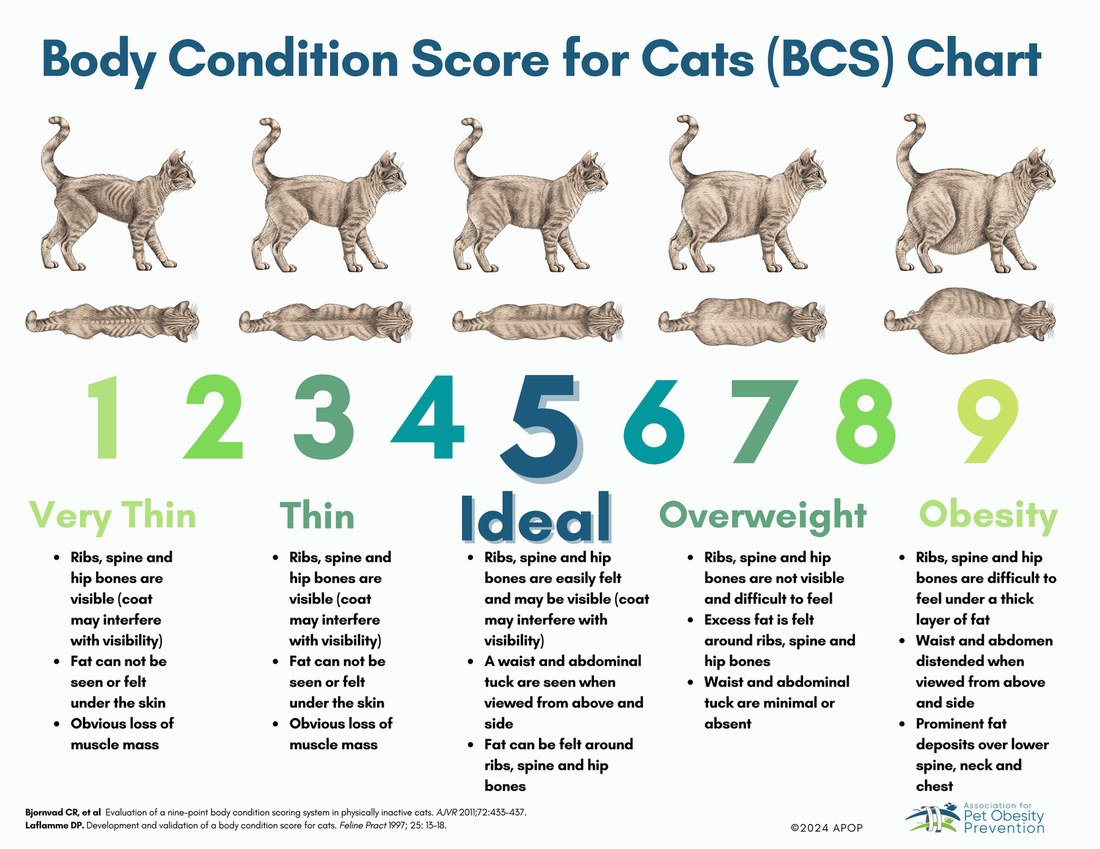
Chart courtesy of the Association for Pet Obesity Prevention · tap to enlarge
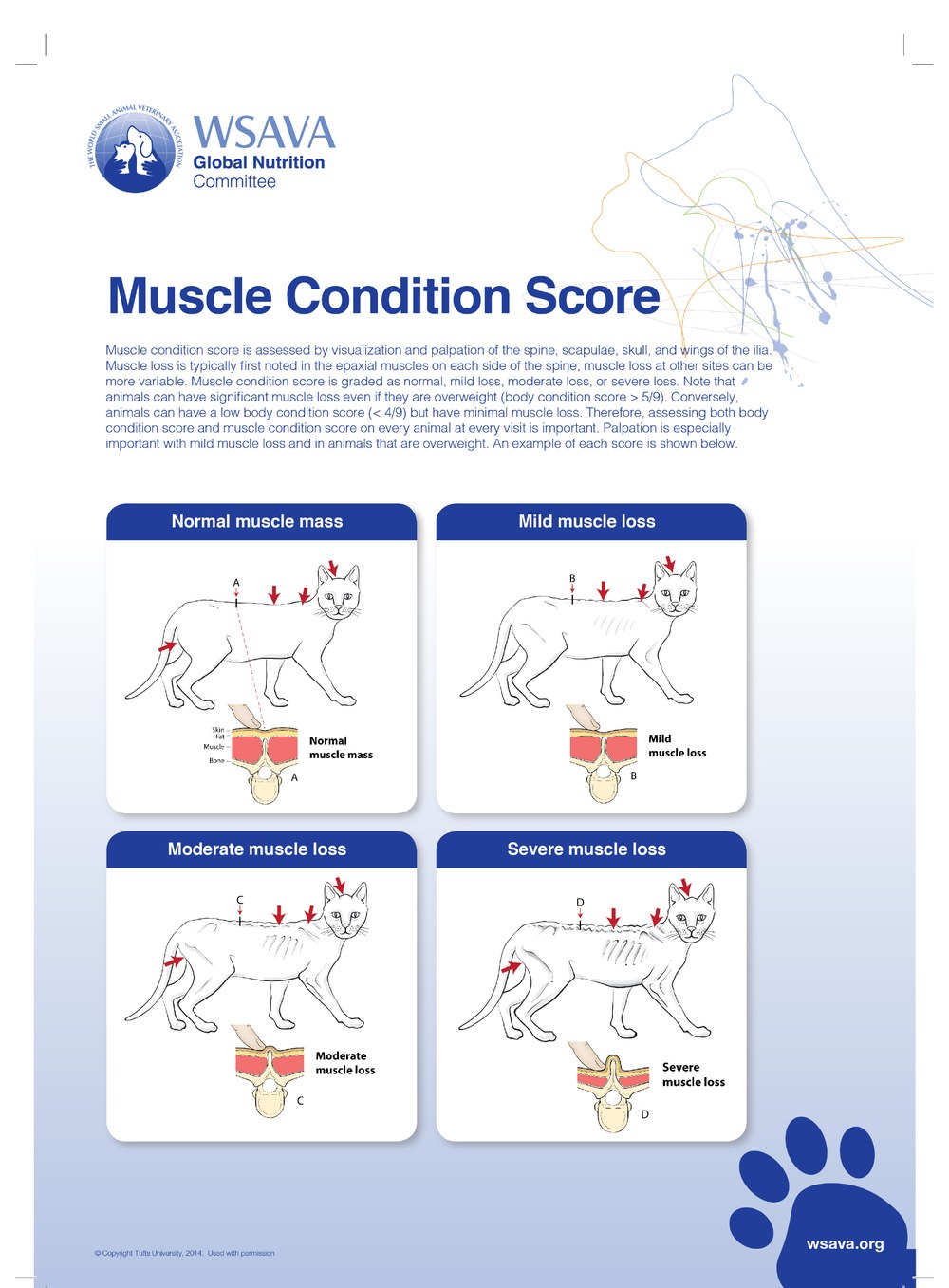
Chart courtesy of WSAVA Global Nutrition Committee · tap to enlarge
Cats are designed to hunt and eat many small meals a day. We often recommend measured meals, puzzle feeders, and feeding toys to support a healthy weight, slow fast eaters, and give your Cat the mental stimulation of working for food.
Evidence first, trends second.
Grain-free, raw, boutique, and home-cooked diets are everywhere, and the marketing is persuasive. Our role is to help you separate what is genuinely good for your Cat from what is well-marketed. We follow the evidence and the guidance of bodies like WSAVA and the FelineVMA.
If you want to home-prepare your Cat’s food, we support that only when the recipe is formulated and supervised by a board-certified veterinary nutritionist. Feeding a homemade diet that is not properly balanced can create nutrient deficiencies in as little as a day, which can lead to severe health complications or premature death. We say this directly because the consequences are real, and we want you to have the full picture before deciding.
When diet becomes part of the treatment.
For many feline conditions, the right diet does real clinical work: slowing disease progression, managing symptoms, and protecting lean body mass. When we recommend a therapeutic diet, we will explain why it matters, what to expect, and what it costs, and we will work with you on transitions and palatability.
- Chronic kidney disease: renal-support diets that ease the kidneys’ workload
- Diabetes: controlled-carbohydrate diets that support glucose regulation
- Hyperthyroidism: targeted nutritional management where appropriate
- Urinary conditions: diets that support bladder and urinary tract health
- Recovery and inappetence: early, aggressive nutritional support for sick Cats