HomePrepareCarrier Guide
Carrier & Transport Guide

The carrier is the first chapter of every visit.

How your Cat experiences the carrier and the journey shapes their emotional baseline before the exam begins. A prepared Cat arrives calmer, tolerates handling better, and recovers faster.

Read the Guide
Pre-Visit Checklist
  • Carrier has been out at home for several days
  • Familiar bedding or worn clothing inside
  • Feline pheromone product sprayed 30 minutes before loading
  • Top-loading carrier used if available
  • Carrier covered with a light blanket during transport
  • Car pre-cooled or warmed before loading
  • Carrier secured so it does not slide in vehicle
  • Music off or low and calm during the drive
Why It Matters Clinically

The carrier is not logistics. It is medicine.

Cats accumulate stress rather than releasing it. The carrier that appeared suddenly, the unfamiliar car motion, the sounds from outside, each stacks onto the last.

🏠
Leaving Home
🧺
The Carrier
🚗
Car Travel
🎵
Unfamiliar Sounds & Scents
📋
The Exam Itself
🏠
Returning Home

Each stressor stacks onto the last. A Cat who arrives overwhelmed has fewer emotional reserves for the exam. Preparation reduces the stack.
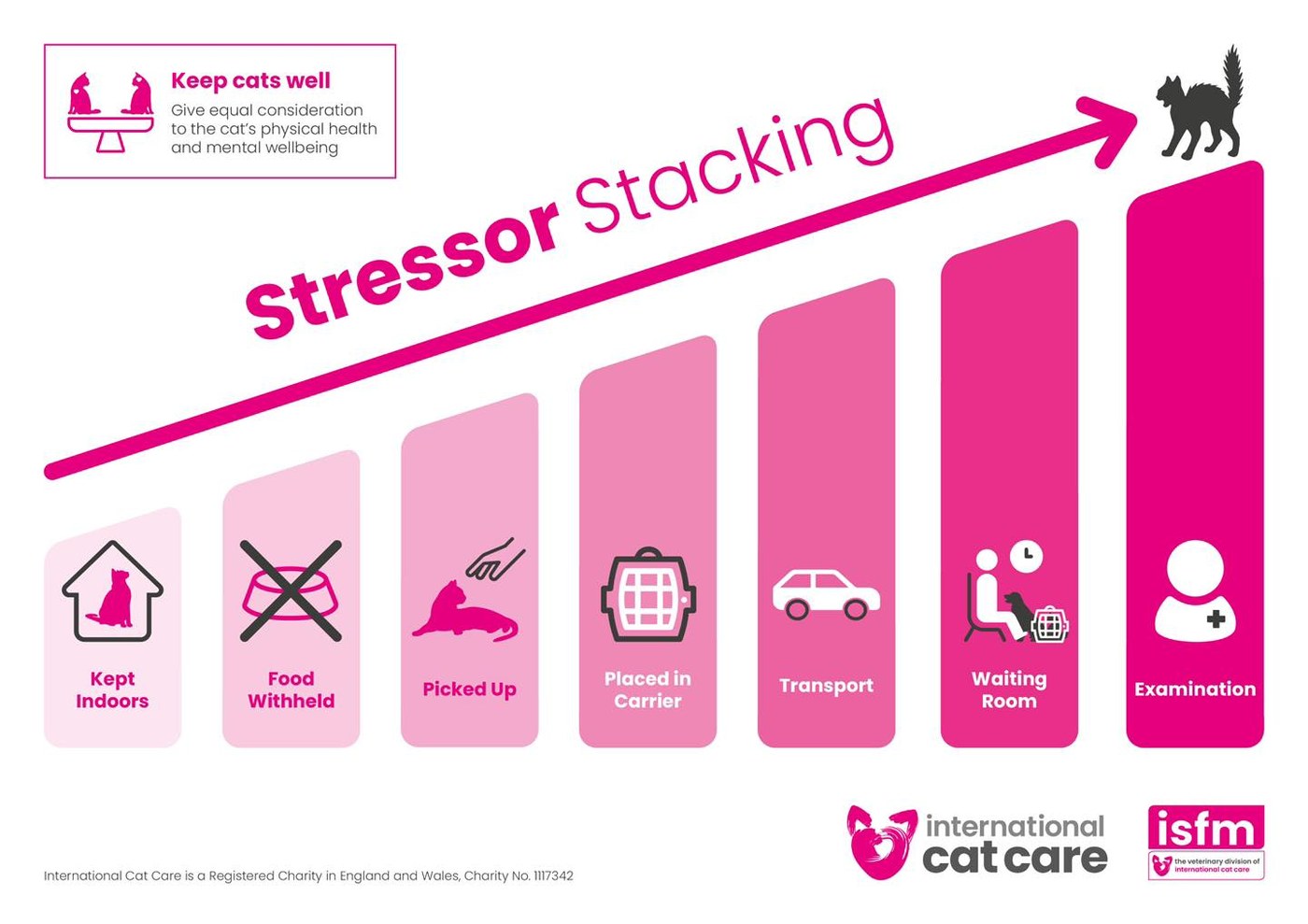
ISFM Stressor Stacking diagram showing cumulative stress from kept indoors through examination
Stressor Stacking — International Society of Feline Medicine (ISFM) & International Cat Care • icatcare.org • International Cat Care is a Registered Charity in England and Wales, Charity No. 1117342
The Clinical Impact

Cats who arrive already overwhelmed often have elevated heart rates, altered blood pressure readings, and higher FAS scores, all of which affect diagnostic accuracy. Pre-visit preparation directly improves clinical outcomes, not just comfort.

Carrier Selection

Not all carriers are equal for Cats.

Top-Loading Carriers
The gold standard. Cats can be lifted in and out from above, far less threatening than being pulled through a small front opening. Allows examination inside the carrier if needed.
Most Recommended
Two-Piece Hard-Shell
Removable top half allows the entire exam to happen in the carrier bottom, a nest. Ideal for Cats who refuse to exit.
Great for Anxious Cats
Soft-Sided Carriers
Acceptable for travel-comfortable Cats. Less ideal for anxious Cats. Ensure the frame is sturdy and sides don’t compress during transport.
For Calm Travelers
Carrier Training

Make the carrier part of home.

1
Leave it out always
Place the carrier in a room your Cat frequents with the door open. Put familiar bedding inside. Let it simply exist as furniture. For Cats who have only seen the carrier on appointment days, this single change is transformative.
2
Associate it with good things
Feed meals near the carrier, then just inside the door, then fully inside. Drop treats in throughout the day. The goal is a positive association that forms through repetition.
3
Practice closing the door
Once comfortable entering, begin closing the door for short periods while you stay present. Gradually increase duration. Then practice brief carries around the room.
4
Apply pheromones on appointment days
A feline pheromone product applied inside the carrier 30 minutes before loading has measurable calming effects. Do not spray directly on your Cat, spray the bedding and allow it to dry before loading.
5
Use their own scent
Place a worn t-shirt or item from your Cat’s sleeping area inside the carrier. Familiar scent from a bonded human reduces cortisol response. Simple and consistently effective.
The Journey

What happens in the car matters too.

🌡️
Temperature
Pre-cool or pre-warm your car before loading your Cat. Extreme temperatures are significant stressors and compound the physiological challenge.
🎵
Sound
Keep the radio low or off. Cats hear a much broader range than humans. Sounds acceptable to you can be overwhelming to them. Calm or species-specific music if any.
👀
Visual Shielding
Cover the carrier with a light breathable blanket during transport. Moving visual stimulation through carrier openings is a significant threat cue. Shielding reduces it without reducing airflow and also helps reduce motion sickness.
🔒
Secure the Carrier
Place the carrier on the floor behind the passenger seat or secure it with a seatbelt through the handle. Your Cat should not feel the carrier shifting underneath them.
If Your Cat Gets Car Sick

Motion-related nausea is common and a stress amplifier. If your Cat has vomited or drooled during past car trips, let us know when you book. There are options available including withholding food 2 to 3 hours before travel and, in some cases, medication.

Products That Help

OTC options that genuinely work.

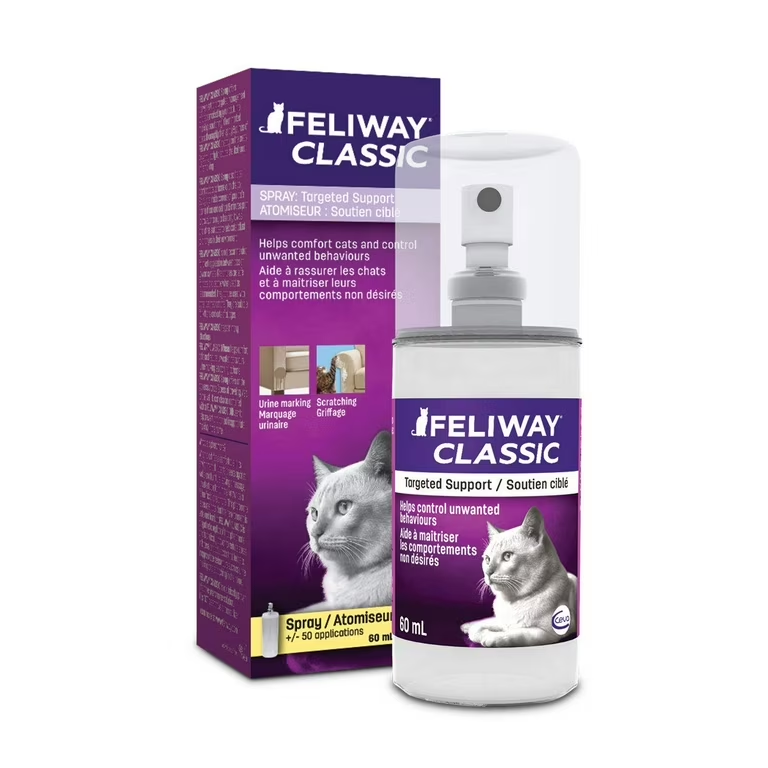
Feliway Classic Spray
Synthetic Pheromone · OTC
Mimics the feline facial pheromone deposited when Cats rub on familiar objects. Spray inside the carrier 30 minutes before use and allow to dry before your Cat enters. Do not spray directly on your Cat. Learn more →
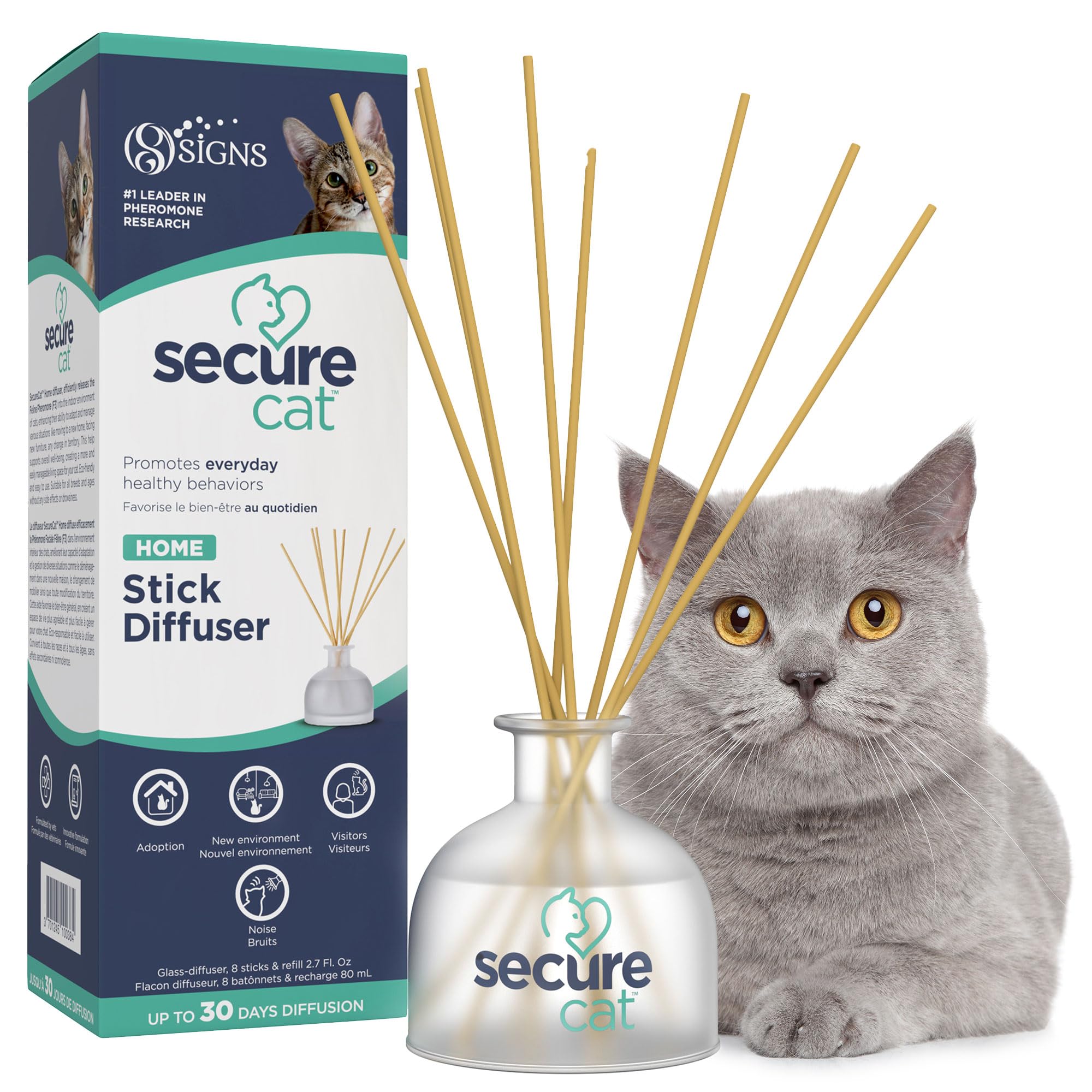
SecureCat Diffuser
SecureCat Feline Pheromone Products
Multi-Pheromone Diffuser · OTC
A feline-specific pheromone diffuser and spray system designed for carriers and home environments. SecureCat offers options for both at-home use and travel-specific calming. Learn more →
Feliway Optimum Diffuser
Multi-Pheromone Diffuser · OTC
Multi-pheromone blend associated with feline emotional comfort. Plug in where the carrier lives at home. Most effective when running continuously in the weeks before a scheduled visit. Learn more →
Prescription Options Available

For Cats with significant travel anxiety, prescription pre-visit medication is available and completely normal. Ask your Care Team about this option before your next visit. See our full Pre-Visit Calm guide for all options.

Questions before your visit?

Our Feline Experience Specialists are available to take your calls during clinic hours.

Book a consult now